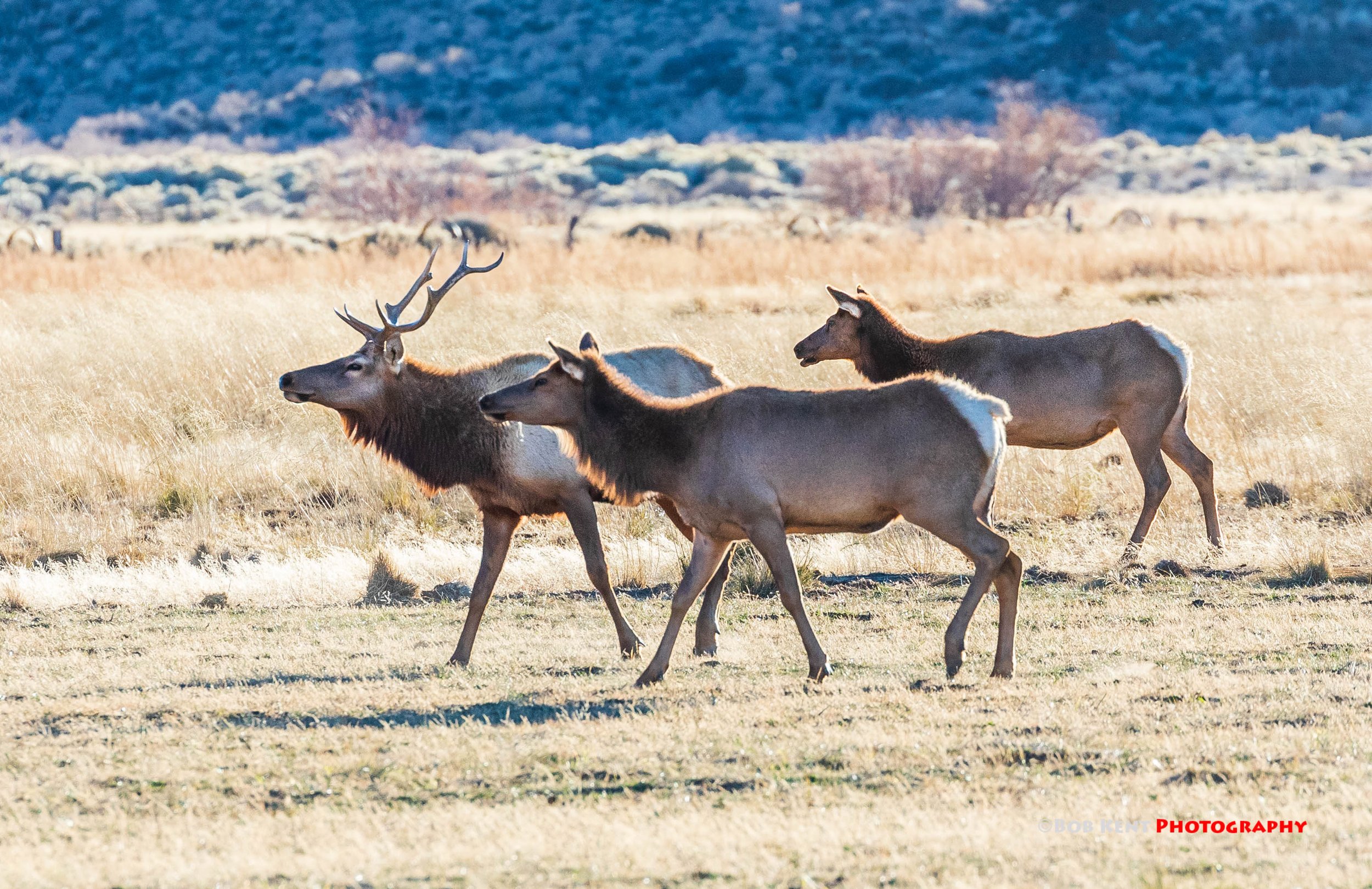
Owens Valley: The Tule Elk on Hwy 395
The tule elk herd was established in Owens Valley on October 10, 1933. Twenty-six tule elk, 7 bulls, 3 yearlings, 11 cows, and 6 calves, were brought from Yosemite National Park to an enclosure in the Owens Valley near Aberdeen and held for several days before their release. Four months later, 28 more elk were brought from Buttonwillow (which became the Tupman Tule Elk State Reserve) to augment that initial release. These original translocated elk have since expanded in size and range and have formed eight distinct tule elk sub-herds located throughout Owens Valley.

Bull Elk
Our Elk Photographic Journey
When traveling on 395 just south of Big Pine we always look for the Tule Elk at the wildlife turnouts. It was always a mystery to us when they would be in the field there. Unfortunately, when we were lucky enough to see them, I hadn’t had much luck in photographing them.
We usually find the Elk in the late afternoon. That meant I was shooting straight into the sun, which is not ideal. Lots of lens flare. Other times they were way at the far end of the field. Too far away to get a good image.

Riding with the King
One time, all the conditions were perfect. They were near the road. The sun was still high in the sky. I even had rented a long telephoto lens. When we saw the Elk, we pulled off into the viewing pull-out. I grabbed my camera with the telephoto on it. I took a bunch of images and they all looked great on the camera display. When I got them on the computer it was a different story. All the images were blurry. I use a tripod a lot, so don’t usually worry about the shutter speeds too much. Turned out I was shooting a 400 MM telephoto handheld and only had the shutter speed at 60th of a second. Another fail.
A couple of weeks ago we hit all the right conditions. The images you see in this post are from then. I can check another bucket list from my Hwy 395-image list as I now have some Elk images I like!

Keeping an Eye on Me
History of the Owens Valley Elk
Some history about these Tule Elk. Most of the info below is taken from the Fish and Wildlife’s “Distribution and Abundance of Tule Elk in the Owens Valley January 2020” report. You can see the full report here.
The Tule Elk herd was established in Owens Valley on October 10, 1933. Twenty-six Tule Elk, 7 bulls, 3 yearlings, 11 cows, and 6 calves, were brought from Yosemite National Park to an enclosure in the Owens Valley near Aberdeen and held for several days before their release. Four months later, 28 more Elk were brought from Buttonwillow (which became the Tupman Tule Elk State Reserve) to augment that initial release. These original translocated Elk have since expanded in size and range and have formed eight distinct Tule Elk sub-herds located throughout Owens Valley.
The count of the Elk in 2018 showed the following herd sizes.
· Bishop: 80-100
· Tinemaha: 80-100
· Goodale: 50-70
· Independence: 60-80
· Lone Pine: 60-80
· Whitney: 40-60
Where and When to See the Elk
One place to view the Elk is the wildlife viewing pullouts on Hwy 395 just south of Big Pine. The herd there includes bulls with expansive antlers and plenty of cows and calves. There are "Wildlife Viewing" signs that point car pull-outs near two of the herd's most favorite places to graze and bed down. This allows you a safe way to look and photograph the Elk.

Gorgeous Antlers
The best time to see the Elk is spring through fall as the herd stays on or close to irrigated fields to take advantage of the ample water and feed. The best time of day to see them is in the morning.
I am sure to include one of my Elk images on next year’s Eastern Sierra calendar!
-
2016
2
- Dec 14, 2016 Don Henley was Wrong You can go Back Dec 14, 2016
- Sep 10, 2016 Another Bucket List Checked Off – Getting to a Sierra Pass Sep 10, 2016
-
2017
1
- Jul 10, 2017 The Streams are Alive Jul 10, 2017
-
2019
1
- Feb 11, 2019 The Wildflowers are Coming, the Wildflowers are Coming; are You Prepared? Feb 11, 2019
-
2021
2
- Jul 12, 2021 Sound of Silence Jul 12, 2021
- May 3, 2021 The Case for Lingering May 3, 2021
-
2022
1
- Nov 5, 2021 Five Reasons to Buy a Wall Calendar Nov 5, 2021
-
395
1
- Aug 14, 2017 Another Hidden Gem Along Highway 395 Aug 14, 2017
-
Aberdeen
4
- Nov 5, 2021 Five Reasons to Buy a Wall Calendar Nov 5, 2021
- Feb 26, 2019 Lone Pine the Little Town Below a Big Mountain Feb 26, 2019
- Sep 11, 2017 Eastern Sierra Early Morning Scramble (ESMS) Sep 11, 2017
- Aug 14, 2017 Another Hidden Gem Along Highway 395 Aug 14, 2017
-
Airplane
2
- Mar 25, 2019 March in Like a Lion ( and leave the same way!) Mar 25, 2019
- Jan 16, 2017 Clouds are the Photographers Spice of Life Jan 16, 2017
-
Alice's Restaraunt
1
- Dec 7, 2016 Update on Operation Santa Dec 7, 2016
-
Alpine
7
- Jan 17, 2022 Best Images 0f 2021 Jan 17, 2022
- Jul 31, 2017 FIVE SIMPLE STEPS TO ENJOY YOSEMITE ON A CROWDED WEEKEND Jul 31, 2017
- Jul 24, 2017 Mom, why is the sky blue? Mom, Why is the sunset red? Mom, why does it always looks better in the Eastern Sierra? Answers to questions you May have always wanted to know Jul 24, 2017
- Jun 27, 2017 Water Everywhere! Jun 27, 2017
- Sep 26, 2016 Tom's Place Sep 26, 2016
- Sep 19, 2016 Unbelievable - Time again for Fall Colors Sep 19, 2016
- Sep 10, 2016 Another Bucket List Checked Off – Getting to a Sierra Pass Sep 10, 2016
-
Aspens
3
- Oct 20, 2024 Three Days of Fall Colors in the Eastern Sierra Oct 20, 2024
- Sep 22, 2017 Dad Why Do the Trees Change Colors? Sep 22, 2017
- Sep 19, 2016 Unbelievable - Time again for Fall Colors Sep 19, 2016
-
Baseball
1
- May 22, 2015 Some Things Age With Grace May 22, 2015
-
Beach
2
- Jan 10, 2017 Sunrise to Sunset in Southern California Jan 10, 2017
- Dec 14, 2016 Don Henley was Wrong You can go Back Dec 14, 2016
-
Big Pine
1
- Dec 12, 2021 Owens Valley: The Tule Elk on Hwy 395 Dec 12, 2021
-
Big Sky
7
- Jul 1, 2019 A Different Take on Bodie Jul 1, 2019
- Jun 10, 2019 Heaven Jun 10, 2019
- May 20, 2019 A Perfectly Cloudy Day May 20, 2019
- Jan 20, 2019 Hike Big Sycamore Canyon - Tejon Ranch Jan 20, 2019
- Jan 5, 2019 My 12 Best Images of 2018 Jan 5, 2019
- Jul 31, 2017 FIVE SIMPLE STEPS TO ENJOY YOSEMITE ON A CROWDED WEEKEND Jul 31, 2017
- Jan 16, 2017 Clouds are the Photographers Spice of Life Jan 16, 2017
-
Big Sur
1
- Dec 14, 2016 Don Henley was Wrong You can go Back Dec 14, 2016
-
Bishop
1
- Dec 12, 2021 Owens Valley: The Tule Elk on Hwy 395 Dec 12, 2021
-
Bishop Creek
1
- Sep 22, 2017 Dad Why Do the Trees Change Colors? Sep 22, 2017
-
Bixby Bridge
1
- Dec 14, 2016 Don Henley was Wrong You can go Back Dec 14, 2016
-
Blue Sky
7
- Jan 17, 2022 Best Images 0f 2021 Jan 17, 2022
- Jun 10, 2019 Heaven Jun 10, 2019
- Jan 5, 2019 My 12 Best Images of 2018 Jan 5, 2019
- Jul 31, 2017 FIVE SIMPLE STEPS TO ENJOY YOSEMITE ON A CROWDED WEEKEND Jul 31, 2017
- Jul 24, 2017 Mom, why is the sky blue? Mom, Why is the sunset red? Mom, why does it always looks better in the Eastern Sierra? Answers to questions you May have always wanted to know Jul 24, 2017
- Jan 16, 2017 Clouds are the Photographers Spice of Life Jan 16, 2017
- Sep 10, 2016 Another Bucket List Checked Off – Getting to a Sierra Pass Sep 10, 2016
-
Bob Kent
30
- Jul 9, 2022 Channeling Huell Howser in the Eastern Sierra Jul 9, 2022
- Jan 17, 2022 Best Images 0f 2021 Jan 17, 2022
- Dec 12, 2021 Owens Valley: The Tule Elk on Hwy 395 Dec 12, 2021
- May 17, 2021 Early Morning Around the Loop May 17, 2021
- May 3, 2021 The Case for Lingering May 3, 2021
- Jul 1, 2019 A Different Take on Bodie Jul 1, 2019
- Jun 10, 2019 Heaven Jun 10, 2019
- May 20, 2019 A Perfectly Cloudy Day May 20, 2019
- Apr 1, 2019 My Path to Better Wildflower Images Apr 1, 2019
- Mar 25, 2019 March in Like a Lion ( and leave the same way!) Mar 25, 2019
- Mar 15, 2019 The End of the Line (well maybe) - Keeler Mar 15, 2019
- Feb 26, 2019 Lone Pine the Little Town Below a Big Mountain Feb 26, 2019
- Feb 11, 2019 The Wildflowers are Coming, the Wildflowers are Coming; are You Prepared? Feb 11, 2019
- Jan 20, 2019 Hike Big Sycamore Canyon - Tejon Ranch Jan 20, 2019
- Jan 5, 2019 My 12 Best Images of 2018 Jan 5, 2019
- Sep 22, 2017 Dad Why Do the Trees Change Colors? Sep 22, 2017
- Sep 11, 2017 Eastern Sierra Early Morning Scramble (ESMS) Sep 11, 2017
- Aug 14, 2017 Another Hidden Gem Along Highway 395 Aug 14, 2017
- Jul 31, 2017 FIVE SIMPLE STEPS TO ENJOY YOSEMITE ON A CROWDED WEEKEND Jul 31, 2017
- Jul 24, 2017 Mom, why is the sky blue? Mom, Why is the sunset red? Mom, why does it always looks better in the Eastern Sierra? Answers to questions you May have always wanted to know Jul 24, 2017
- Jul 10, 2017 The Streams are Alive Jul 10, 2017
- Jun 27, 2017 Water Everywhere! Jun 27, 2017
- Jan 16, 2017 Clouds are the Photographers Spice of Life Jan 16, 2017
- Jan 10, 2017 Sunrise to Sunset in Southern California Jan 10, 2017
- Dec 14, 2016 Don Henley was Wrong You can go Back Dec 14, 2016
- Dec 5, 2016 Quests in the Owens Valley are Fun Dec 5, 2016
- Oct 31, 2016 Dia de los Muertos 2016 Oct 31, 2016
- Sep 26, 2016 Tom's Place Sep 26, 2016
- Sep 19, 2016 Unbelievable - Time again for Fall Colors Sep 19, 2016
- Sep 10, 2016 Another Bucket List Checked Off – Getting to a Sierra Pass Sep 10, 2016
-
Bodie
1
- Jul 1, 2019 A Different Take on Bodie Jul 1, 2019
-
Bridgeport
2
- Nov 5, 2021 Five Reasons to Buy a Wall Calendar Nov 5, 2021
- Jul 19, 2021 Clouds make my Eastern Sierra Sunset Images Pop! Jul 19, 2021
-
Cal
1
- Dec 12, 2021 Owens Valley: The Tule Elk on Hwy 395 Dec 12, 2021
-
California
26
- Jul 9, 2022 Channeling Huell Howser in the Eastern Sierra Jul 9, 2022
- Jan 17, 2022 Best Images 0f 2021 Jan 17, 2022
- Nov 5, 2021 Five Reasons to Buy a Wall Calendar Nov 5, 2021
- Jun 7, 2021 Sunrise, Sunset Jun 7, 2021
- Jul 1, 2019 A Different Take on Bodie Jul 1, 2019
- Jun 10, 2019 Heaven Jun 10, 2019
- May 20, 2019 A Perfectly Cloudy Day May 20, 2019
- Mar 25, 2019 March in Like a Lion ( and leave the same way!) Mar 25, 2019
- Mar 15, 2019 The End of the Line (well maybe) - Keeler Mar 15, 2019
- Feb 11, 2019 The Wildflowers are Coming, the Wildflowers are Coming; are You Prepared? Feb 11, 2019
- Jan 20, 2019 Hike Big Sycamore Canyon - Tejon Ranch Jan 20, 2019
- Jan 5, 2019 My 12 Best Images of 2018 Jan 5, 2019
- Sep 22, 2017 Dad Why Do the Trees Change Colors? Sep 22, 2017
- Sep 11, 2017 Eastern Sierra Early Morning Scramble (ESMS) Sep 11, 2017
- Aug 14, 2017 Another Hidden Gem Along Highway 395 Aug 14, 2017
- Jul 31, 2017 FIVE SIMPLE STEPS TO ENJOY YOSEMITE ON A CROWDED WEEKEND Jul 31, 2017
- Jul 24, 2017 Mom, why is the sky blue? Mom, Why is the sunset red? Mom, why does it always looks better in the Eastern Sierra? Answers to questions you May have always wanted to know Jul 24, 2017
- Jun 27, 2017 Water Everywhere! Jun 27, 2017
- Jan 10, 2017 Sunrise to Sunset in Southern California Jan 10, 2017
- Dec 14, 2016 Don Henley was Wrong You can go Back Dec 14, 2016
- Dec 5, 2016 Quests in the Owens Valley are Fun Dec 5, 2016
- Oct 31, 2016 Dia de los Muertos 2016 Oct 31, 2016
- Sep 26, 2016 Tom's Place Sep 26, 2016
- Sep 19, 2016 Unbelievable - Time again for Fall Colors Sep 19, 2016
- Sep 10, 2016 Another Bucket List Checked Off – Getting to a Sierra Pass Sep 10, 2016
- May 22, 2015 Some Things Age With Grace May 22, 2015
-
California's Gold
1
- Jul 9, 2022 Channeling Huell Howser in the Eastern Sierra Jul 9, 2022
-
Canon
13
- Jun 7, 2021 Sunrise, Sunset Jun 7, 2021
- Jun 10, 2019 Heaven Jun 10, 2019
- Jan 5, 2019 My 12 Best Images of 2018 Jan 5, 2019
- Sep 22, 2017 Dad Why Do the Trees Change Colors? Sep 22, 2017
- Sep 11, 2017 Eastern Sierra Early Morning Scramble (ESMS) Sep 11, 2017
- Jul 31, 2017 FIVE SIMPLE STEPS TO ENJOY YOSEMITE ON A CROWDED WEEKEND Jul 31, 2017
- Jul 24, 2017 Mom, why is the sky blue? Mom, Why is the sunset red? Mom, why does it always looks better in the Eastern Sierra? Answers to questions you May have always wanted to know Jul 24, 2017
- Jan 16, 2017 Clouds are the Photographers Spice of Life Jan 16, 2017
- Jan 10, 2017 Sunrise to Sunset in Southern California Jan 10, 2017
- Dec 14, 2016 Don Henley was Wrong You can go Back Dec 14, 2016
- Dec 5, 2016 Quests in the Owens Valley are Fun Dec 5, 2016
- Sep 26, 2016 Tom's Place Sep 26, 2016
- Sep 10, 2016 Another Bucket List Checked Off – Getting to a Sierra Pass Sep 10, 2016
-
Canon 5d Mark III
20
- Jan 17, 2022 Best Images 0f 2021 Jan 17, 2022
- Jun 10, 2019 Heaven Jun 10, 2019
- May 20, 2019 A Perfectly Cloudy Day May 20, 2019
- Apr 1, 2019 My Path to Better Wildflower Images Apr 1, 2019
- Mar 25, 2019 March in Like a Lion ( and leave the same way!) Mar 25, 2019
- Feb 26, 2019 Lone Pine the Little Town Below a Big Mountain Feb 26, 2019
- Feb 11, 2019 The Wildflowers are Coming, the Wildflowers are Coming; are You Prepared? Feb 11, 2019
- Jan 5, 2019 My 12 Best Images of 2018 Jan 5, 2019
- Sep 22, 2017 Dad Why Do the Trees Change Colors? Sep 22, 2017
- Sep 11, 2017 Eastern Sierra Early Morning Scramble (ESMS) Sep 11, 2017
- Jul 31, 2017 FIVE SIMPLE STEPS TO ENJOY YOSEMITE ON A CROWDED WEEKEND Jul 31, 2017
- Jul 24, 2017 Mom, why is the sky blue? Mom, Why is the sunset red? Mom, why does it always looks better in the Eastern Sierra? Answers to questions you May have always wanted to know Jul 24, 2017
- Jun 27, 2017 Water Everywhere! Jun 27, 2017
- Jan 16, 2017 Clouds are the Photographers Spice of Life Jan 16, 2017
- Jan 10, 2017 Sunrise to Sunset in Southern California Jan 10, 2017
- Dec 14, 2016 Don Henley was Wrong You can go Back Dec 14, 2016
- Dec 5, 2016 Quests in the Owens Valley are Fun Dec 5, 2016
- Oct 31, 2016 Dia de los Muertos 2016 Oct 31, 2016
- Sep 26, 2016 Tom's Place Sep 26, 2016
- Sep 10, 2016 Another Bucket List Checked Off – Getting to a Sierra Pass Sep 10, 2016
-
Canon 5d Mark IV
1
- May 3, 2021 The Case for Lingering May 3, 2021
-
Cars
1
- Sep 26, 2016 Tom's Place Sep 26, 2016
-
Cemetery
1
- Oct 31, 2016 Dia de los Muertos 2016 Oct 31, 2016
-
Christmas
2
- Jan 10, 2017 Sunrise to Sunset in Southern California Jan 10, 2017
- Dec 7, 2016 Update on Operation Santa Dec 7, 2016
-
Clouds
16
- Oct 20, 2024 Three Days of Fall Colors in the Eastern Sierra Oct 20, 2024
- May 18, 2023 Cloudy with a 100% of Spectacular May 18, 2023
- Jul 19, 2021 Clouds make my Eastern Sierra Sunset Images Pop! Jul 19, 2021
- Jul 1, 2019 A Different Take on Bodie Jul 1, 2019
- Jun 10, 2019 Heaven Jun 10, 2019
- May 20, 2019 A Perfectly Cloudy Day May 20, 2019
- Mar 25, 2019 March in Like a Lion ( and leave the same way!) Mar 25, 2019
- Jan 20, 2019 Hike Big Sycamore Canyon - Tejon Ranch Jan 20, 2019
- Jan 5, 2019 My 12 Best Images of 2018 Jan 5, 2019
- Sep 11, 2017 Eastern Sierra Early Morning Scramble (ESMS) Sep 11, 2017
- Jul 31, 2017 FIVE SIMPLE STEPS TO ENJOY YOSEMITE ON A CROWDED WEEKEND Jul 31, 2017
- Jul 24, 2017 Mom, why is the sky blue? Mom, Why is the sunset red? Mom, why does it always looks better in the Eastern Sierra? Answers to questions you May have always wanted to know Jul 24, 2017
- Jan 16, 2017 Clouds are the Photographers Spice of Life Jan 16, 2017
- Jan 10, 2017 Sunrise to Sunset in Southern California Jan 10, 2017
- Dec 14, 2016 Don Henley was Wrong You can go Back Dec 14, 2016
- Dec 5, 2016 Quests in the Owens Valley are Fun Dec 5, 2016
-
Coastline
2
- Jan 10, 2017 Sunrise to Sunset in Southern California Jan 10, 2017
- Dec 14, 2016 Don Henley was Wrong You can go Back Dec 14, 2016
-
Cove
1
- Dec 14, 2016 Don Henley was Wrong You can go Back Dec 14, 2016
-
Crowley LAke
2
- Jul 24, 2017 Mom, why is the sky blue? Mom, Why is the sunset red? Mom, why does it always looks better in the Eastern Sierra? Answers to questions you May have always wanted to know Jul 24, 2017
- Jan 16, 2017 Clouds are the Photographers Spice of Life Jan 16, 2017
-
DSLR
16
- May 3, 2021 The Case for Lingering May 3, 2021
- Jul 1, 2019 A Different Take on Bodie Jul 1, 2019
- Jun 10, 2019 Heaven Jun 10, 2019
- May 20, 2019 A Perfectly Cloudy Day May 20, 2019
- Apr 1, 2019 My Path to Better Wildflower Images Apr 1, 2019
- Mar 25, 2019 March in Like a Lion ( and leave the same way!) Mar 25, 2019
- Mar 15, 2019 The End of the Line (well maybe) - Keeler Mar 15, 2019
- Feb 26, 2019 Lone Pine the Little Town Below a Big Mountain Feb 26, 2019
- Feb 11, 2019 The Wildflowers are Coming, the Wildflowers are Coming; are You Prepared? Feb 11, 2019
- Jan 5, 2019 My 12 Best Images of 2018 Jan 5, 2019
- Sep 22, 2017 Dad Why Do the Trees Change Colors? Sep 22, 2017
- Sep 11, 2017 Eastern Sierra Early Morning Scramble (ESMS) Sep 11, 2017
- Aug 14, 2017 Another Hidden Gem Along Highway 395 Aug 14, 2017
- Jul 31, 2017 FIVE SIMPLE STEPS TO ENJOY YOSEMITE ON A CROWDED WEEKEND Jul 31, 2017
- Jul 24, 2017 Mom, why is the sky blue? Mom, Why is the sunset red? Mom, why does it always looks better in the Eastern Sierra? Answers to questions you May have always wanted to know Jul 24, 2017
- Jul 10, 2017 The Streams are Alive Jul 10, 2017
-
Day of the Dead
1
- Oct 31, 2016 Dia de los Muertos 2016 Oct 31, 2016
-
Dead
1
- Oct 31, 2016 Dia de los Muertos 2016 Oct 31, 2016
-
Dia de los Muertos
1
- Oct 31, 2016 Dia de los Muertos 2016 Oct 31, 2016
-
Dodger Stadium
1
- May 22, 2015 Some Things Age With Grace May 22, 2015
-
Dodgers
1
- May 22, 2015 Some Things Age With Grace May 22, 2015
-
Eastern Sierra
28
- Oct 20, 2024 Three Days of Fall Colors in the Eastern Sierra Oct 20, 2024
- May 18, 2023 Cloudy with a 100% of Spectacular May 18, 2023
- Jul 9, 2022 Channeling Huell Howser in the Eastern Sierra Jul 9, 2022
- Jun 24, 2022 Quiet Moment - Waterfall Jun 24, 2022
- Jan 17, 2022 Best Images 0f 2021 Jan 17, 2022
- Dec 12, 2021 Owens Valley: The Tule Elk on Hwy 395 Dec 12, 2021
- Nov 5, 2021 Five Reasons to Buy a Wall Calendar Nov 5, 2021
- Jul 19, 2021 Clouds make my Eastern Sierra Sunset Images Pop! Jul 19, 2021
- Jul 12, 2021 Sound of Silence Jul 12, 2021
- Jun 7, 2021 Sunrise, Sunset Jun 7, 2021
- May 17, 2021 Early Morning Around the Loop May 17, 2021
- May 3, 2021 The Case for Lingering May 3, 2021
- Jul 1, 2019 A Different Take on Bodie Jul 1, 2019
- Jun 10, 2019 Heaven Jun 10, 2019
- May 20, 2019 A Perfectly Cloudy Day May 20, 2019
- Mar 15, 2019 The End of the Line (well maybe) - Keeler Mar 15, 2019
- Feb 26, 2019 Lone Pine the Little Town Below a Big Mountain Feb 26, 2019
- Feb 11, 2019 The Wildflowers are Coming, the Wildflowers are Coming; are You Prepared? Feb 11, 2019
- Jan 5, 2019 My 12 Best Images of 2018 Jan 5, 2019
- Sep 11, 2017 Eastern Sierra Early Morning Scramble (ESMS) Sep 11, 2017
- Aug 14, 2017 Another Hidden Gem Along Highway 395 Aug 14, 2017
- Jul 31, 2017 FIVE SIMPLE STEPS TO ENJOY YOSEMITE ON A CROWDED WEEKEND Jul 31, 2017
- Jul 24, 2017 Mom, why is the sky blue? Mom, Why is the sunset red? Mom, why does it always looks better in the Eastern Sierra? Answers to questions you May have always wanted to know Jul 24, 2017
- Jul 10, 2017 The Streams are Alive Jul 10, 2017
- Jun 27, 2017 Water Everywhere! Jun 27, 2017
- Jan 16, 2017 Clouds are the Photographers Spice of Life Jan 16, 2017
- Dec 5, 2016 Quests in the Owens Valley are Fun Dec 5, 2016
- Sep 19, 2016 Unbelievable - Time again for Fall Colors Sep 19, 2016
-
El Matador State Beach
1
- Jan 16, 2017 Clouds are the Photographers Spice of Life Jan 16, 2017
-
Elk
1
- Dec 12, 2021 Owens Valley: The Tule Elk on Hwy 395 Dec 12, 2021
-
Fall
2
- Sep 22, 2017 Dad Why Do the Trees Change Colors? Sep 22, 2017
- Sep 19, 2016 Unbelievable - Time again for Fall Colors Sep 19, 2016
-
Fall Colors
5
- Oct 20, 2024 Three Days of Fall Colors in the Eastern Sierra Oct 20, 2024
- Jan 17, 2022 Best Images 0f 2021 Jan 17, 2022
- Nov 5, 2021 Five Reasons to Buy a Wall Calendar Nov 5, 2021
- Sep 22, 2017 Dad Why Do the Trees Change Colors? Sep 22, 2017
- Sep 19, 2016 Unbelievable - Time again for Fall Colors Sep 19, 2016
-
Fog
1
- Dec 14, 2016 Don Henley was Wrong You can go Back Dec 14, 2016
-
Forest
5
- Jul 31, 2017 FIVE SIMPLE STEPS TO ENJOY YOSEMITE ON A CROWDED WEEKEND Jul 31, 2017
- Jul 24, 2017 Mom, why is the sky blue? Mom, Why is the sunset red? Mom, why does it always looks better in the Eastern Sierra? Answers to questions you May have always wanted to know Jul 24, 2017
- Jul 10, 2017 The Streams are Alive Jul 10, 2017
- Sep 19, 2016 Unbelievable - Time again for Fall Colors Sep 19, 2016
- Sep 10, 2016 Another Bucket List Checked Off – Getting to a Sierra Pass Sep 10, 2016
-
Ghosttown
1
- Jul 1, 2019 A Different Take on Bodie Jul 1, 2019
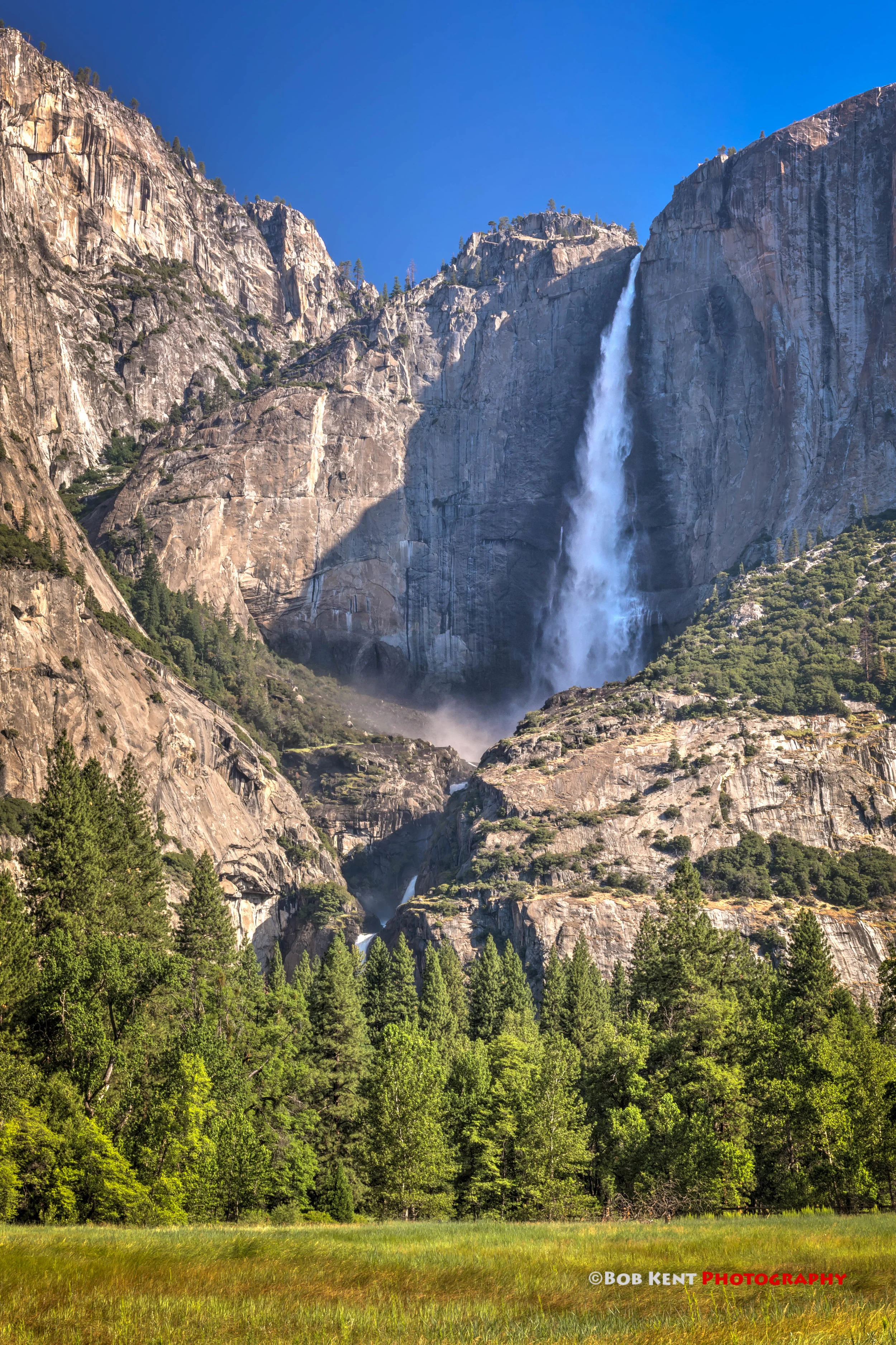
FIVE SIMPLE STEPS TO ENJOY YOSEMITE ON A CROWDED WEEKEND
Yosemite can be the most beautiful place on earth or a crowded hell. Five steps to make your visit a truly pleasant and memorable trip.
Mammoth Peak Trail to Mono Pass
Everyone loves Yosemite! The reality is we all areloving Yosemite to death.
Yosemite is one of the most beautiful and relaxing places on Earth. Except when it is Memorial Day, 4th of July, or Labor Day weekend and:
a third of all the inhabitants on the planet are in the park (5,217,114 people visited Yosemite in 2016)
at the same time,
looking at the exact same things.
Now you have traveled 3,000 miles to the Sierra on your one and only “Holiday” (doesn’t Holiday sound so much more relaxing than vacation) for the year!
It is Labor Day Weekend. Your camping or fishing in the Eastern Sierra and one of the items on your bucket list is to see Yosemite. Unfortunately, a gazillion other people have the same idea. You have two ways on how to visit Yosemite:
As a tourist that wants a picture of every water fall in the valley
As a sane Human Being that actually wants to have a truly pleasant memorable time
Looks Like Fun to Me.....
As a Tourist
You sleep to nine in the morning. You have breakfast. Then go straight for the valley floor to see the water falls. You and those gazillion other people are going to spend the day enjoying:
an immersion into primitive and wild environments ("not" 2 hours in to go approximately 1.3 miles)
a high degree of solitude (trying to find the sole parking spot left on the valley floor)
natural sounds (car horns and bus brakes)
natural smells (diesel)
great views (well this is a given because even when it is packed wall to wall the views are great)
Yea right. Not my cup of tea.
Your remembrance will be more of traffic, smelling car fumes, and standing in lines than beautiful nature. By the end of the day, you will come out of Yosemite more stressed than you ever were at work.
Fist Light
A Sane Human Being
It takes a little bit of work and planning but even on a busy weekend like Labor Day you can get a lot out of Yosemite and miss most, if not all, the crowds.
Here are Five Simple Steps to see Yosemite as it should be seen:
One - Get up early or Start in the Early Evening
Nothing Like Aplenglow
When I say early I mean before sunrise. Get into the park early. Pick a location in advance, preferably up in the high country like Tuolumne Meadows, Glacier Point, etc. Get there before sunrise and then plan to stay there for a while. For the next two to four hours, ninety five (95) percent of the “Tourists” will be:
Still asleep
Cooking breakfast in camp or ordering breakfast at a crowded food stand
East Side -Tuolumne Meadows
Seeing a sunrise or sunset in Yosemite is an unforgettable experience; seeing a Yosemite sunrise in quite solitude is “priceless.”
Yosemite Sunset
If you choose to go to a meadow, really early or really late, area there is a good chance that deer will be out and about. Seeing a deer up close will stop the kids whining about getting up so dang early faster than anything on earth. For the rest of the morning they will be occupied scouring their surroundings to see if they can find more deer.
More importantly you will get the chance to experience that primitive environment and with a high degree of solitude that makes Yosemite heaven on Earth.
Sunset with Deer in Tuolumne Meadows
Two - Take a Hike
After the sunrise take a short hike on one of the many trails in the park. You don’t have to hike seven or eight miles to get away from the crowds. Just a half mile or so will do. Remember by now the most of the masses are still in their camp just now washing their breakfast dishes! Walking through Tuolumne Meadows, Lyle Canyon, or the Panorama Trail (Glacier Point) are incredible. You go for as long a distance as you like then simply turn around and come back.
Three - Stay In One Spot a While
So many people rush through the park get to one of the famous scenic spots, take a picture of themselves in front of it, and then rush to the next spot. I highly recommend finding a picnic table in a quite area and sit for a while. Bring some snacks, sit back, and soak up the park; the views, the smells. You will be amazed on how much the look and feel of a single location will change as the sun rises in the sky.

Wine and Snacks at Tenaya Lake
Even better will be the people you meet. What was that saying "If you stay in one place long enough the entire world will pass you by. Well, Yosemite is a "Holiday" destination for everyone on the planet.
If you stay in the park long enough, bring a bottle of your favorite wine and some plastic wine glasses. We did this once at Lake Tenaya. A flustered lady, in the middle of a death march to see every single thing in Yosemite in one day, stopped and looked at us. She said with a big smile “You must be locals because you know how to do this right!”. We agreed. She took her picture and marched on. We on the other hand continued to enjoy our wine for a spell. Really don’t know how long that spell was because we were having such fun we lost track of the time!
Act I Tenaya Early Afternoon - Water Ripples
Act III Tenaya Early Evening - Firework Show
Four - Talk to the People You Meet
I think you will find the people you meet in the high country this early in the morning will be:
Friendly as hell, as they are not being stressed out by big crowds
Interesting, maybe hiking the entire John Muir Trail and have great stories to tell
Helpful, they probably know way more than you do about where to go and what to see
- May be from another country with great stories of foreign lands to tell
We have met the nicest people from all over the world jsut by saying hello.
Five - Get the Heck Out of Dodge Before the Hoards Arrive
Over a Hundred Cars Waiting to Get in at 12:30 PM
If you followed Step One you have been in the park for several hours now. You have
seen an incredible sunrise
were able to watch deer on a meadow
met some friendly interesting new friends.
Just like a casino if you are ahead - take your winnings, cash out, and leave before you lose it all!
Go back to your campsite or condo and take a nap (you deserve it you were up before the sunrise!) and dream of the laid back and wonderful adventure you just had.
If you are leaving the Yosemite Park going east I highly recommend stopping at Whoa Nelli Deli, in the Mobil Gas Station. It is near the intersection of Hwy 120 and Hwy 395. They have incredible food and you can sit out in a grass yard over looking magnificent Mono Lake. The other restaurant I recommend is the Mono Inn. It is a bit on the more expensive side but the view of Mono and the food are both top shelf.
In closing, a couple of ground rules about Yosemite:
It's not Disneyland, it is nature, and its wild. It is not designed for your safety. Always be prepared and careful.
Never leave food in your car. Locked cars will not stop a hungry bear.
Be careful around large streams. It is probably moving faster than it looks and is dangerous.
The falls are stunningly beautiful but they are not the only thing to see in the park.
Have a great time in Yosemite!
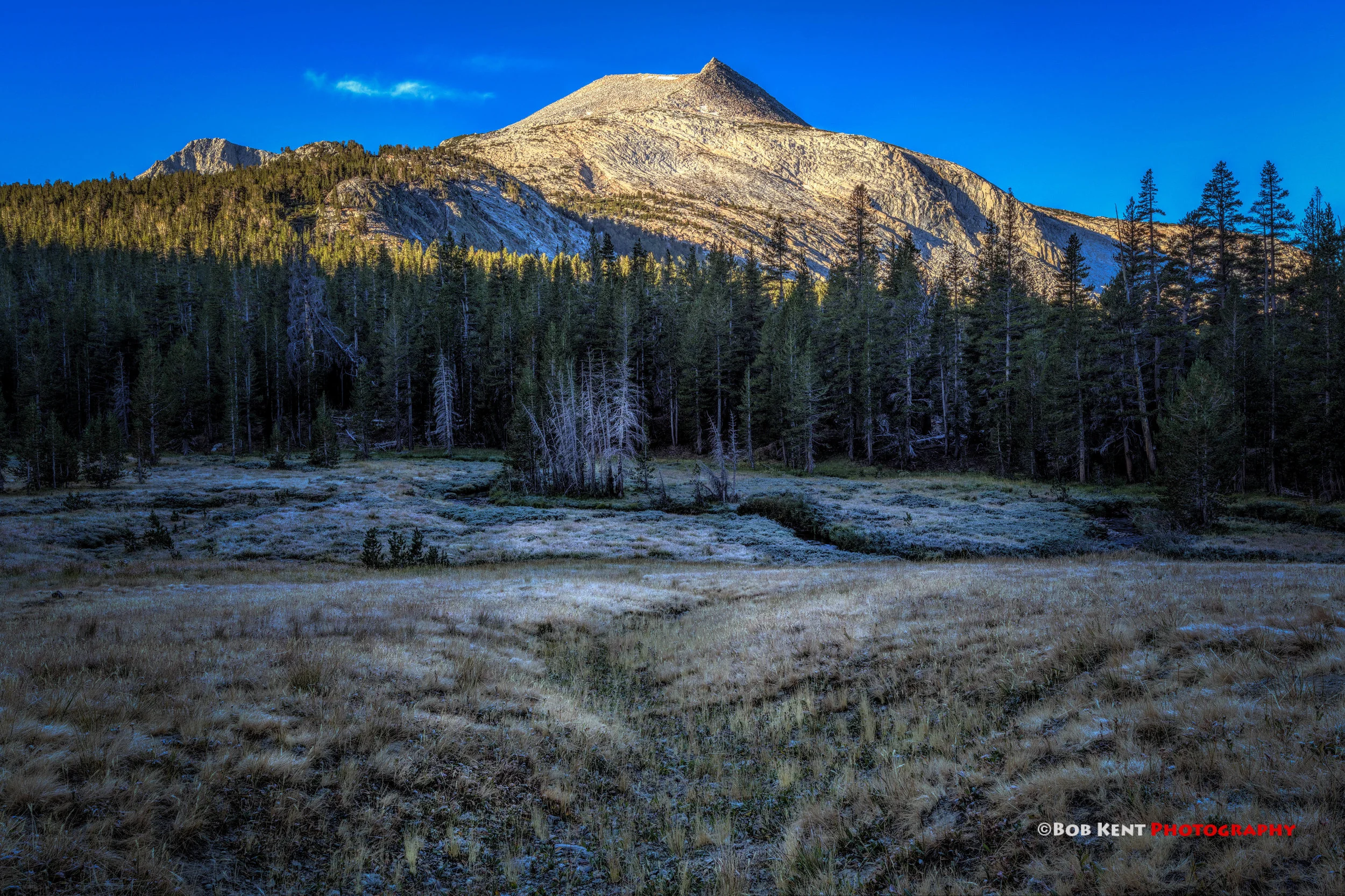
Another Bucket List Checked Off – Getting to a Sierra Pass
Hiking Mono Pass Yosemite is a great hike full of wonderful views of granite peaks and alpine meadows. It has a hidden gift in being able to see Mono Lake 4,000 feet below you!
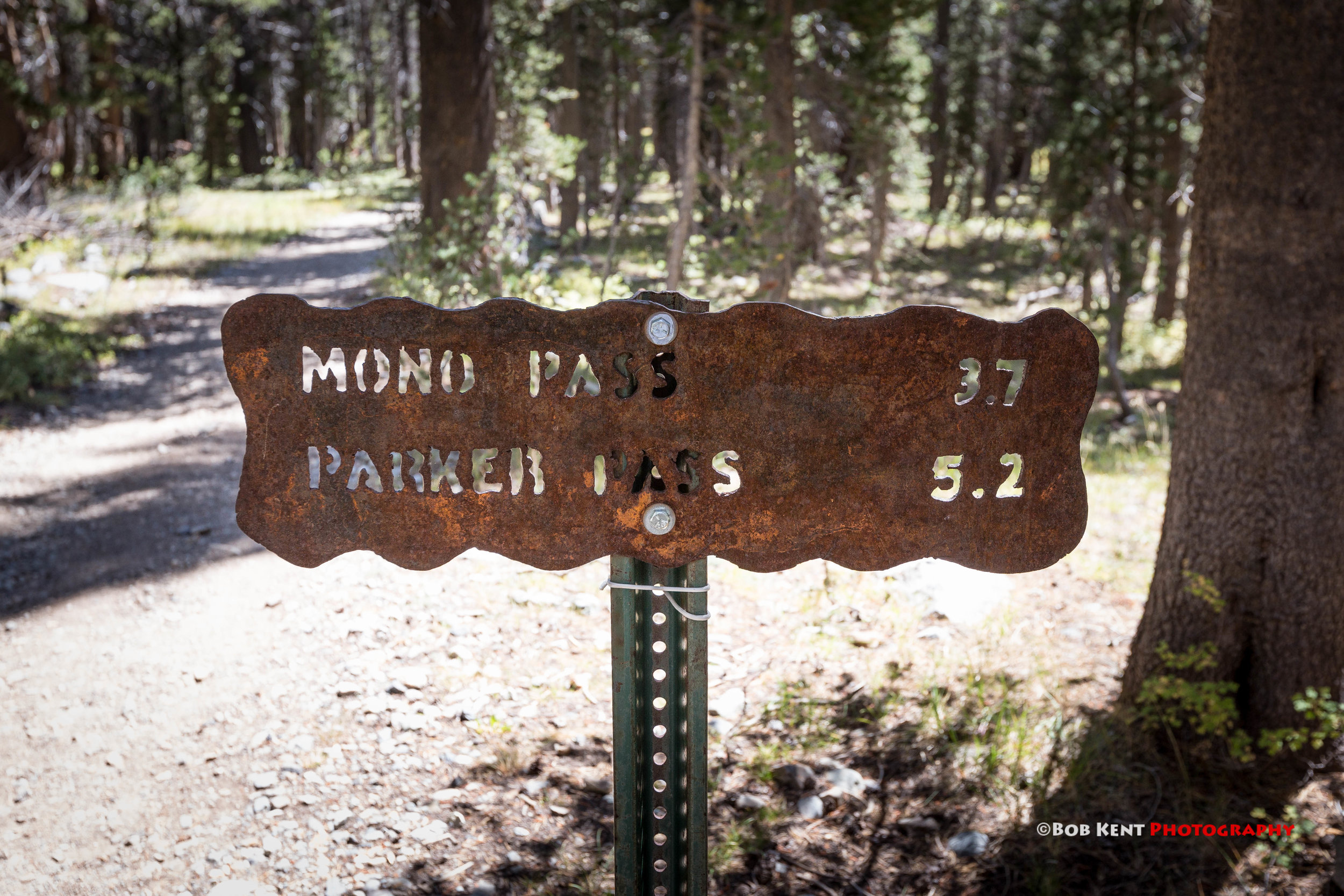
Trail Head
-
March 2026
- Mar 24, 2026 The Impact of AI on Photography Mar 24, 2026
-
October 2024
- Oct 20, 2024 Three Days of Fall Colors in the Eastern Sierra Oct 20, 2024
-
May 2023
- May 18, 2023 Cloudy with a 100% of Spectacular May 18, 2023
-
December 2022
- Dec 30, 2022 20 Yards of Track Dec 30, 2022
-
July 2022
- Jul 9, 2022 Channeling Huell Howser in the Eastern Sierra Jul 9, 2022
-
June 2022
- Jun 24, 2022 Quiet Moment - Waterfall Jun 24, 2022
-
May 2022
- May 1, 2022 Cloud's Life Lessons May 1, 2022
-
January 2022
- Jan 17, 2022 Best Images 0f 2021 Jan 17, 2022
-
December 2021
- Dec 12, 2021 Owens Valley: The Tule Elk on Hwy 395 Dec 12, 2021
-
November 2021
- Nov 5, 2021 Five Reasons to Buy a Wall Calendar Nov 5, 2021
-
October 2021
- Oct 25, 2021 Eastern Sierra Intimate Fall Colors Oct 25, 2021
-
July 2021
- Jul 19, 2021 Clouds make my Eastern Sierra Sunset Images Pop! Jul 19, 2021
- Jul 12, 2021 Sound of Silence Jul 12, 2021
-
June 2021
- Jun 7, 2021 Sunrise, Sunset Jun 7, 2021
-
May 2021
- May 17, 2021 Early Morning Around the Loop May 17, 2021
- May 3, 2021 The Case for Lingering May 3, 2021
-
January 2020
- Jan 31, 2020 Best Images of 2019 Jan 31, 2020
-
July 2019
- Jul 1, 2019 A Different Take on Bodie Jul 1, 2019
-
June 2019
- Jun 10, 2019 Heaven Jun 10, 2019
-
May 2019
- May 20, 2019 A Perfectly Cloudy Day May 20, 2019
-
April 2019
- Apr 1, 2019 My Path to Better Wildflower Images Apr 1, 2019
-
March 2019
- Mar 25, 2019 March in Like a Lion ( and leave the same way!) Mar 25, 2019
- Mar 15, 2019 The End of the Line (well maybe) - Keeler Mar 15, 2019
-
February 2019
- Feb 26, 2019 Lone Pine the Little Town Below a Big Mountain Feb 26, 2019
- Feb 18, 2019 The Word of the Month for February - Snow Feb 18, 2019
- Feb 11, 2019 The Wildflowers are Coming, the Wildflowers are Coming; are You Prepared? Feb 11, 2019
- Feb 4, 2019 Nature’s Vastness is Good for Our Souls Feb 4, 2019
-
January 2019
- Jan 20, 2019 Hike Big Sycamore Canyon - Tejon Ranch Jan 20, 2019
- Jan 13, 2019 Clouds and Glass Jan 13, 2019
- Jan 5, 2019 My 12 Best Images of 2018 Jan 5, 2019
-
September 2017
- Sep 22, 2017 Dad Why Do the Trees Change Colors? Sep 22, 2017
- Sep 11, 2017 Eastern Sierra Early Morning Scramble (ESMS) Sep 11, 2017
-
August 2017
- Aug 14, 2017 Another Hidden Gem Along Highway 395 Aug 14, 2017
-
July 2017
- Jul 31, 2017 FIVE SIMPLE STEPS TO ENJOY YOSEMITE ON A CROWDED WEEKEND Jul 31, 2017
- Jul 24, 2017 Mom, why is the sky blue? Mom, Why is the sunset red? Mom, why does it always looks better in the Eastern Sierra? Answers to questions you May have always wanted to know Jul 24, 2017
- Jul 10, 2017 The Streams are Alive Jul 10, 2017
-
June 2017
- Jun 27, 2017 Water Everywhere! Jun 27, 2017
-
January 2017
- Jan 23, 2017 Cannot Fight It Might as Well Join It Jan 23, 2017
- Jan 16, 2017 Clouds are the Photographers Spice of Life Jan 16, 2017
- Jan 10, 2017 Sunrise to Sunset in Southern California Jan 10, 2017
- Jan 2, 2017 My Top Images of 2016 Jan 2, 2017
-
December 2016
- Dec 29, 2016 Operation Santa Status - A Success Dec 29, 2016
- Dec 21, 2016 Time to Celebrate it is the Shortest, Darkest Damn Day of the Year Dec 21, 2016
- Dec 19, 2016 The Joy of Christmas Trees Dec 19, 2016
- Dec 14, 2016 Don Henley was Wrong You can go Back Dec 14, 2016
- Dec 7, 2016 Update on Operation Santa Dec 7, 2016
- Dec 5, 2016 Quests in the Owens Valley are Fun Dec 5, 2016
-
November 2016
- Nov 28, 2016 Santa’s Letters a Way to Make a Difference Nov 28, 2016
- Nov 21, 2016 Awesome Austin Nov 21, 2016
- Nov 7, 2016 Veteran's Day Nov 7, 2016
-
October 2016
- Oct 31, 2016 Dia de los Muertos 2016 Oct 31, 2016
- Oct 24, 2016 Of Frequency and Luck Oct 24, 2016
- Oct 17, 2016 Show ‘Em That Flat Penny Oct 17, 2016
- Oct 10, 2016 Fall Colors in the Sierra Oct 10, 2016
- Oct 3, 2016 What a Summer! Looking Back as We Move To Fall Oct 3, 2016
-
September 2016
- Sep 26, 2016 Tom's Place Sep 26, 2016
- Sep 19, 2016 Unbelievable - Time again for Fall Colors Sep 19, 2016
- Sep 10, 2016 Another Bucket List Checked Off – Getting to a Sierra Pass Sep 10, 2016
-
January 2016
- Jan 23, 2016 Lake Havasu Balloon Festival Jan 23, 2016
-
November 2015
- Nov 5, 2015 2016 Calendars Nov 5, 2015
-
July 2015
- Jul 11, 2015 See Less Enjoy More Jul 11, 2015
-
May 2015
- May 22, 2015 Some Things Age With Grace May 22, 2015
- May 15, 2015 Welcome to the Website Launch May 15, 2015
Working to complete my 54 for Dave Quest I have done more hikes this summer than ever before. I came to realize though I had yet to hike to a mountain pass, ever. I had come close. Once on the McGee Creek trail but was stopped by snow. Another time on the Crystal Lake hike but was going to Crystal Lake not the pass. So I had never actually stood on top of a Sierra mountain pass. It became a bucket list item! So I started looking for a day hike that got me to a pass.
Mono Pass in Yosemite seemed to fit the bill. It was in the Yosemite high country in which I love hiking in. It had a reasonable difficulty level at eight miles in length (round trip) and 900 feet of altitude gain it figured it would be pleasant hike.
The description of the hike on the Yosemite Hikes web page seemed to good to be true to get to a pass. “There are only a few stretches where the incline is steep enough to make you notice you're climbing.” Well it was to good to be true as one of those “stretches” was as over a mile and had a pretty steep grade.
Even with the unexpected climb I really enjoyed this hike. While it did not have a big lake at the end like some hikes do; the high country meadows and the view down Bloody Canyon to Mono Lake more than made up for it.
Mono Pass is the type of hike I like because it starts of flat and saves the climb later on once your warmed up. My start time at 6:30 AM was perfect to catch the first morning light on Mammoth Peak
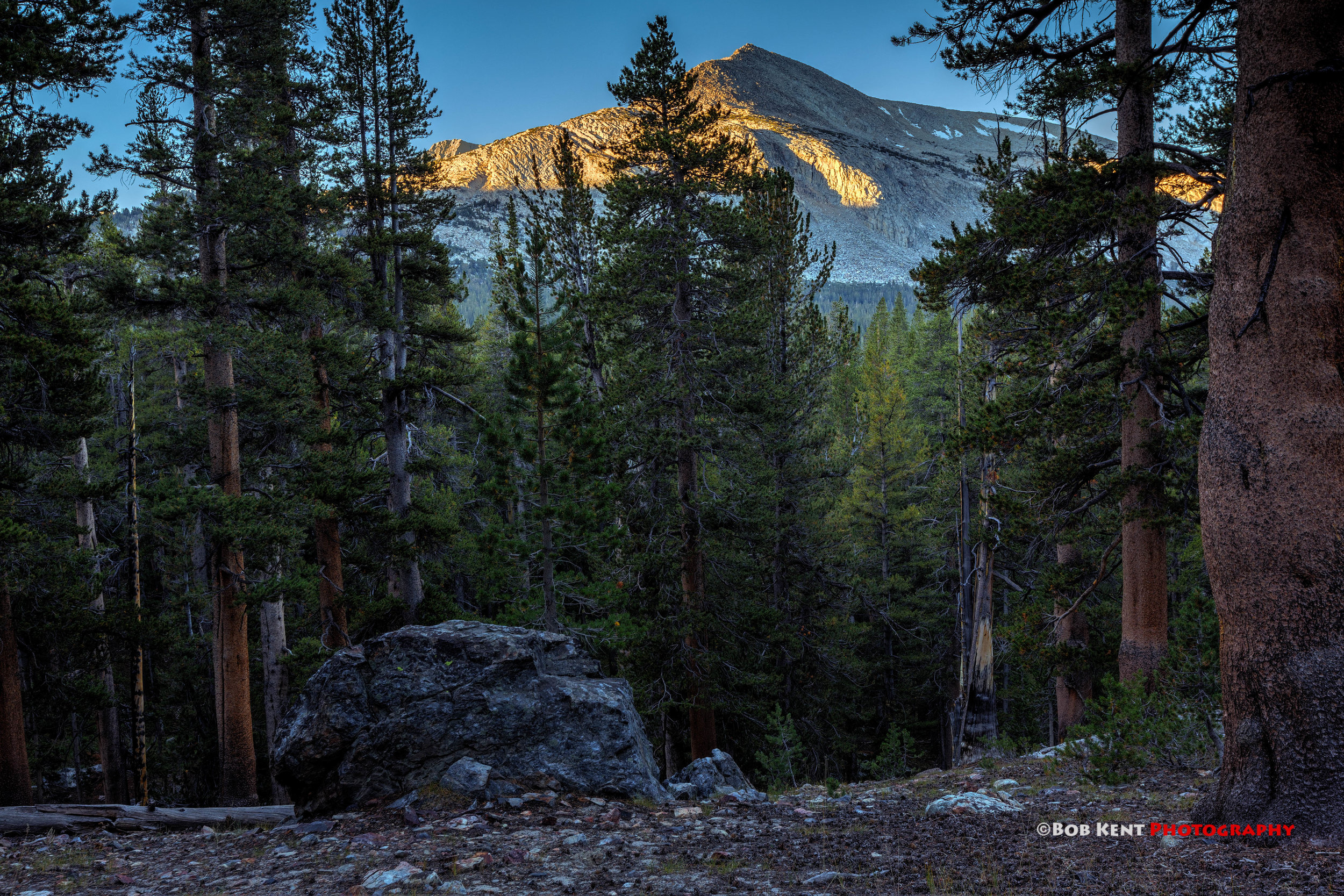
First Light on Mammoth Peak

Mammoth Peak Overlooking a Meadow
eing late in the summer most of the creeks were dry. That is good and bad. Bad, because I imagine the streams were knock down gorgeous. Good, because I did not encounter one mosquito on the entire hike. Dana Fork was the primary exception to this water drought and provided a beautiful log water fall right next to the trail.

Dana Fork Waterfall
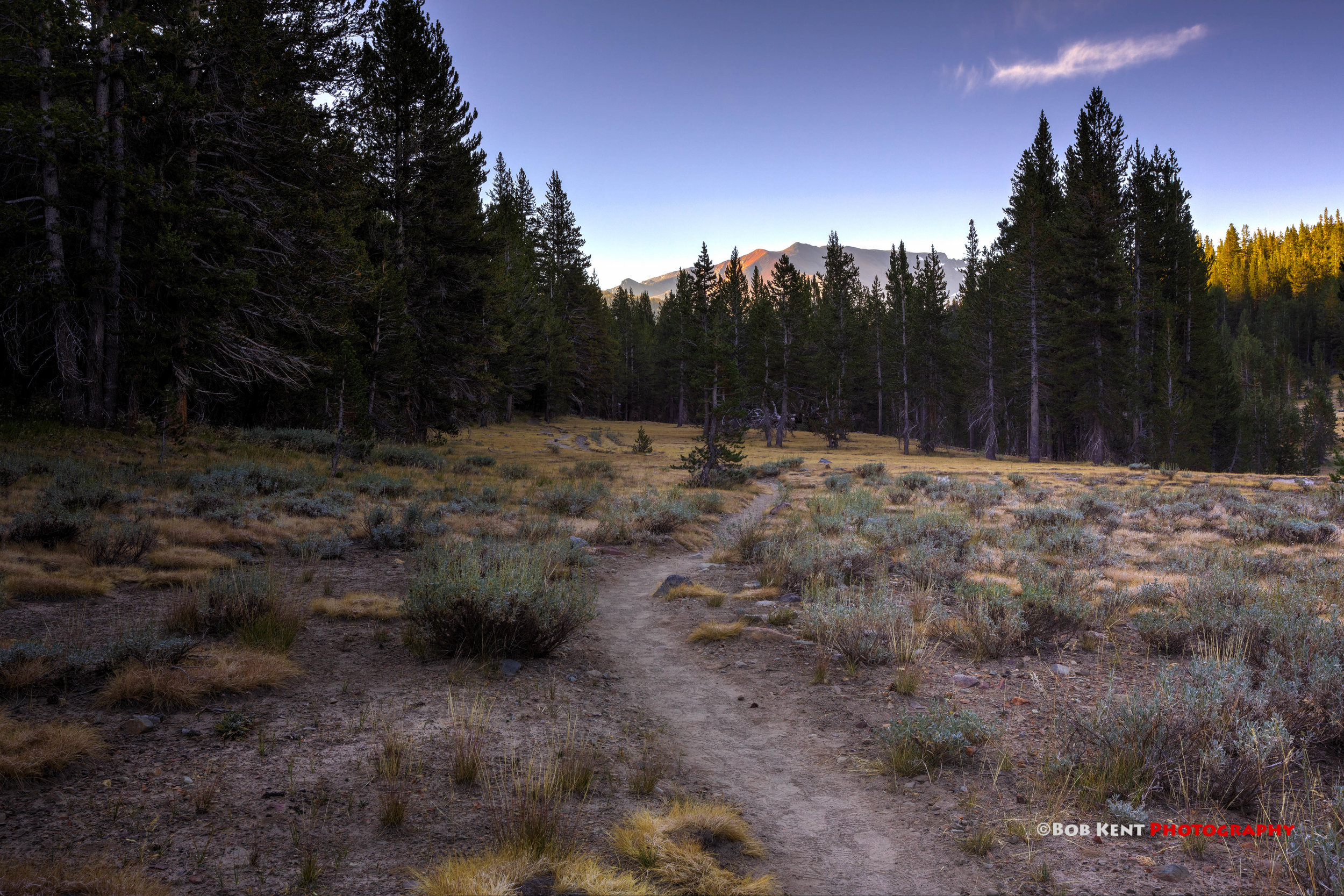
Looking Up the Trail in the Morning Light
There are a couple of decaying mining cabins along the trail. A bit of background on these cabins. The Homer Mining Index, one of the few papers in the area at the time, states that Fuller and Hayt (or Hoyt) discovered antimonial silver in Mono Pass and called their claim the Golden Crown. The Mammoth City Herald, another newspaper of the day predicted that within a year, thousands of miners would be working in Mono Pass at the Golden Crown. The mines never panned out and Mono Pass will be remembered as a way for miners to cross the Sierra to get to Dogtown and Monoville, mines on the eastern Sierra near Mono Lake. The cabins are a quite reminder of the mining history of the area.

First Cabin

Cabin II
There is long section that climbs up. After that ordeal you are rewarded as the trail weaves in and out of a stunningly beautiful alpine meadow. There are also beautiful views of Mt Lewis and the Kuna Crest.

Looking Forward to Mt Lewis
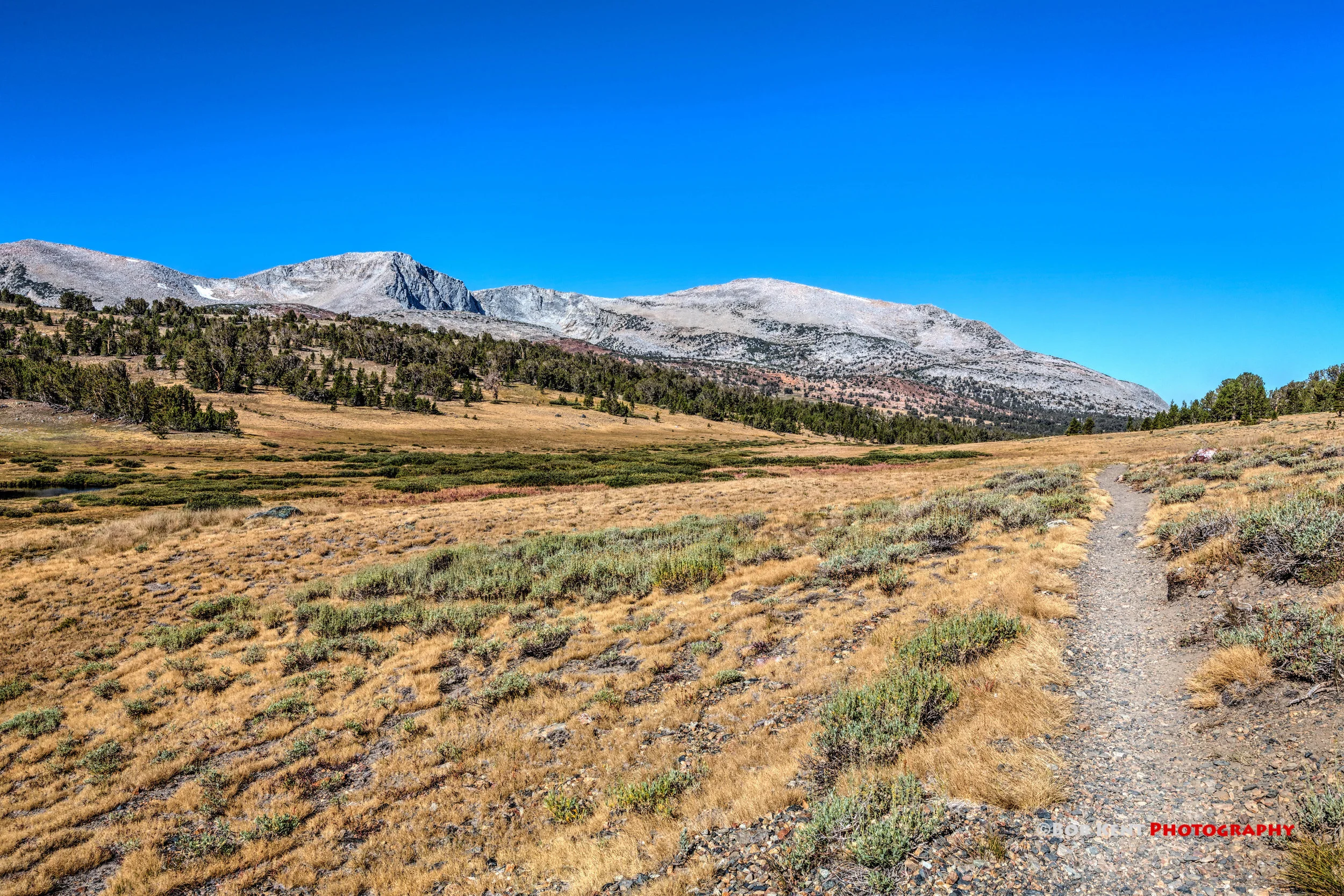
Looking Back to the Kuna Crest
Just before the pass is a lovely unnamed pond. A short distance farther up the trail, at the summit, is a small lake appropriately named Summit Lake. This is the end of the Mono Pass trail and the beginning of the Bloody Canyon trail. It is also the edge of Yosemite Park. Up to this point the Mono Pass trail was beautiful forest and meadows. In contrast, Bloody Canyon is barren rock. An incredible difference and a testimonial to the impact the Sierra has on the weather and the land around it.
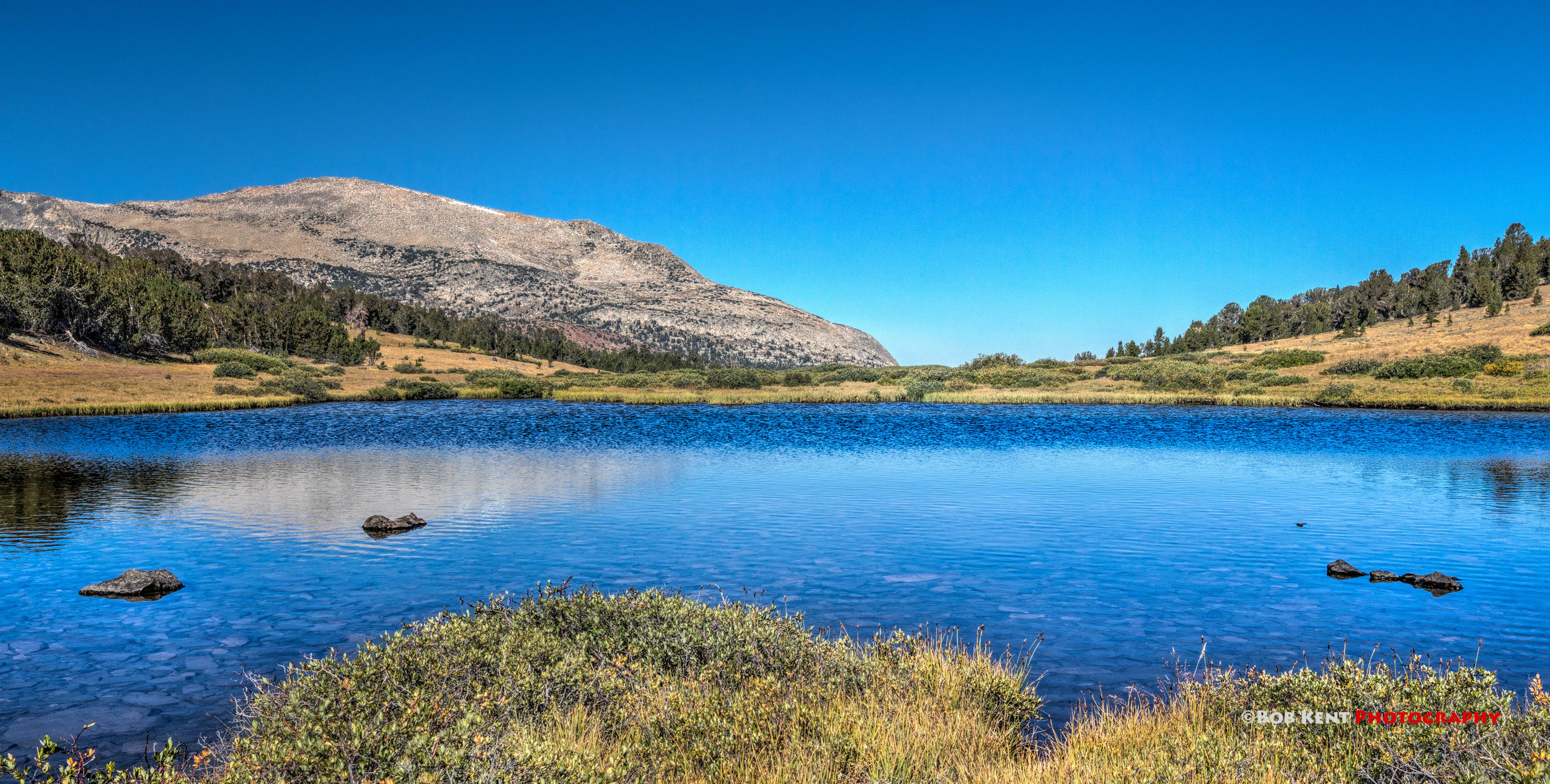
Unnamed Pond
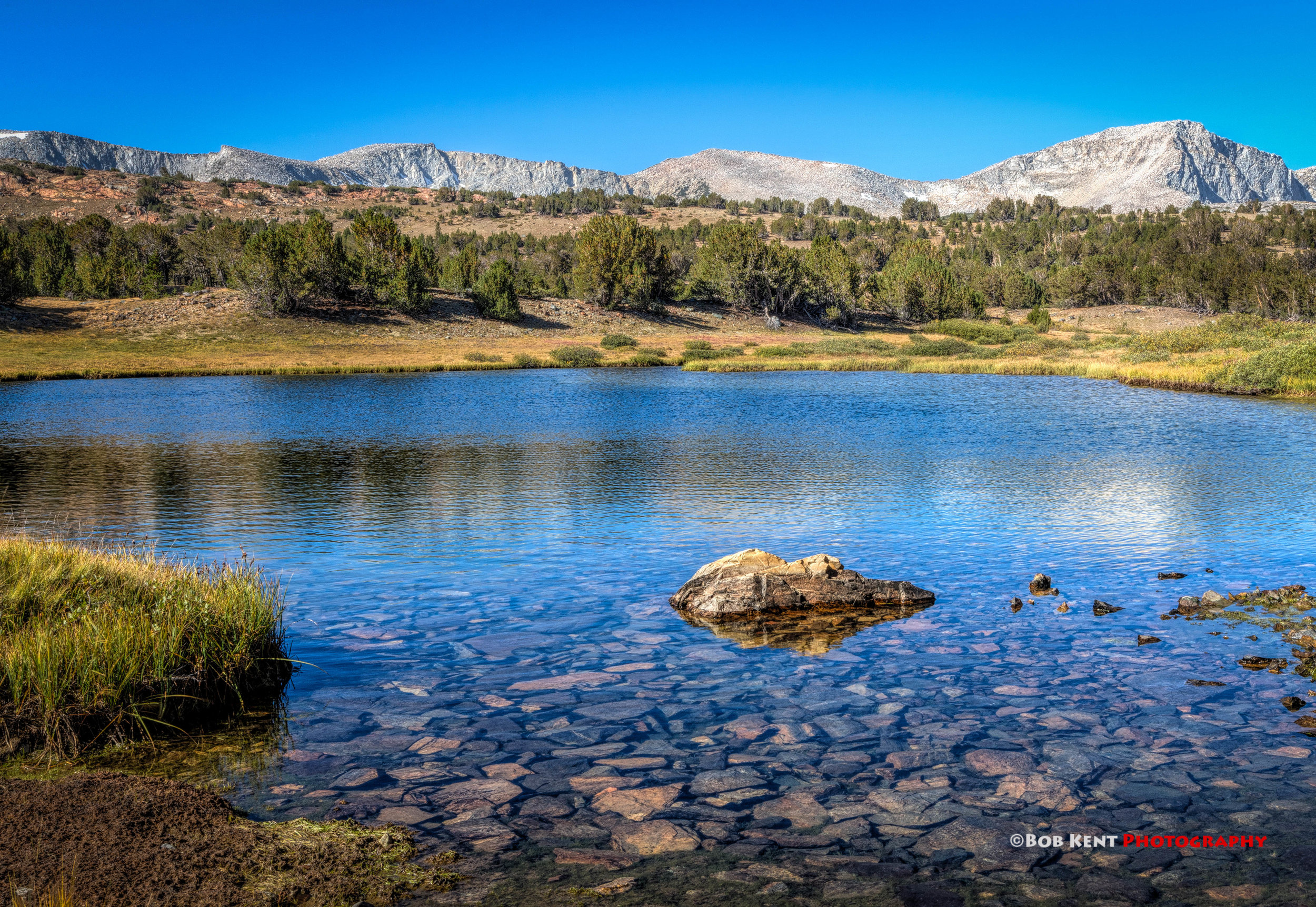
Unnamed Pond

Other Places to Go!
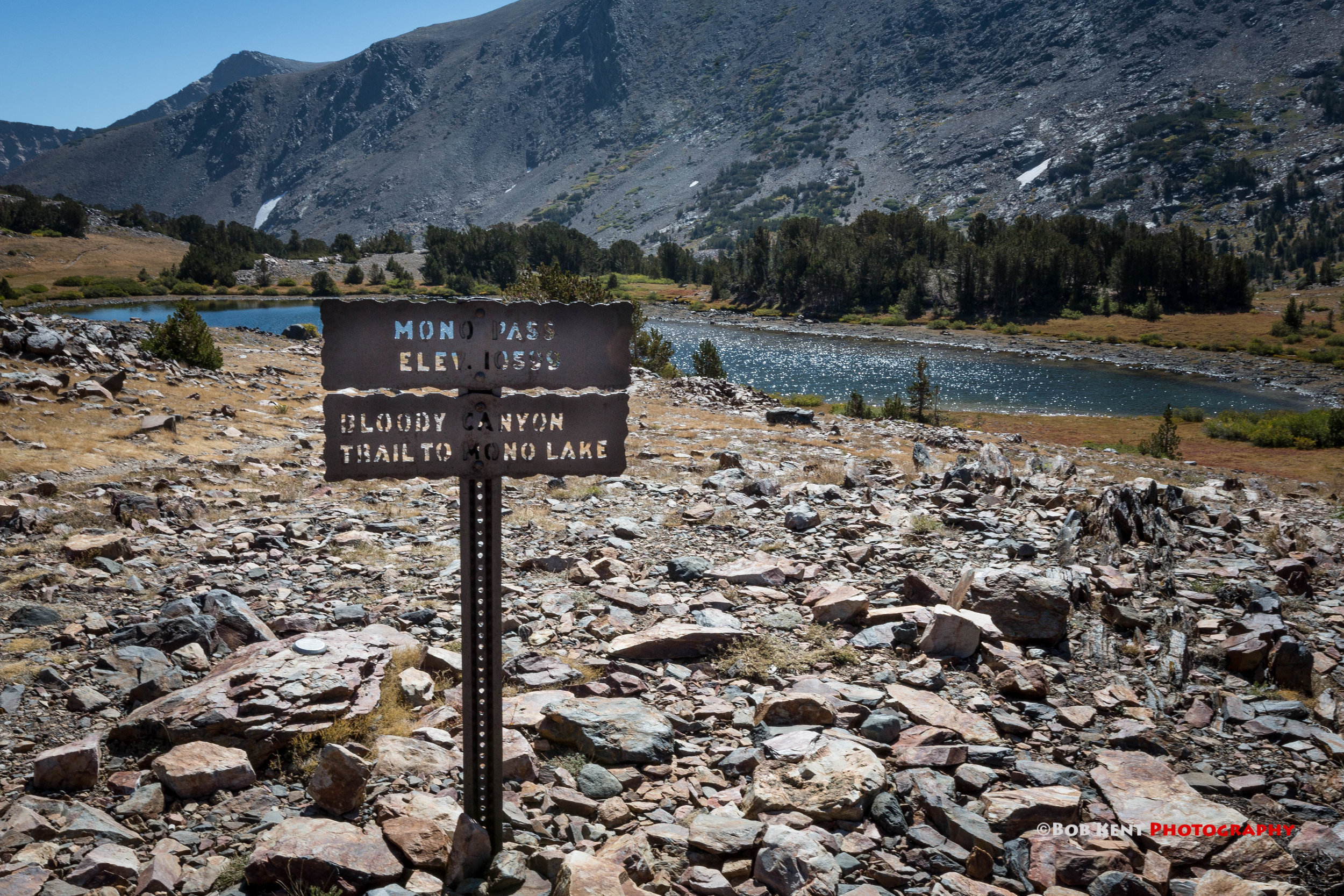
Mono Pass and Summit Lake
I continued for a for just over a quarter of a mile down the Bloody Canyon trail toward Upper Sardine Lake to get a scenic look of Mono Lake 4,000 feet below. The view is awesome and one of the reasons I did this hike!

Bloody Canyon with Mono Lake Below
This was a wonderful hike with great views of the Yosemite high country, granite peaks like Mammoth and Mt. Lewis, and Mono Lake. I will definitely do it again and maybe finish at Spillway Lake.