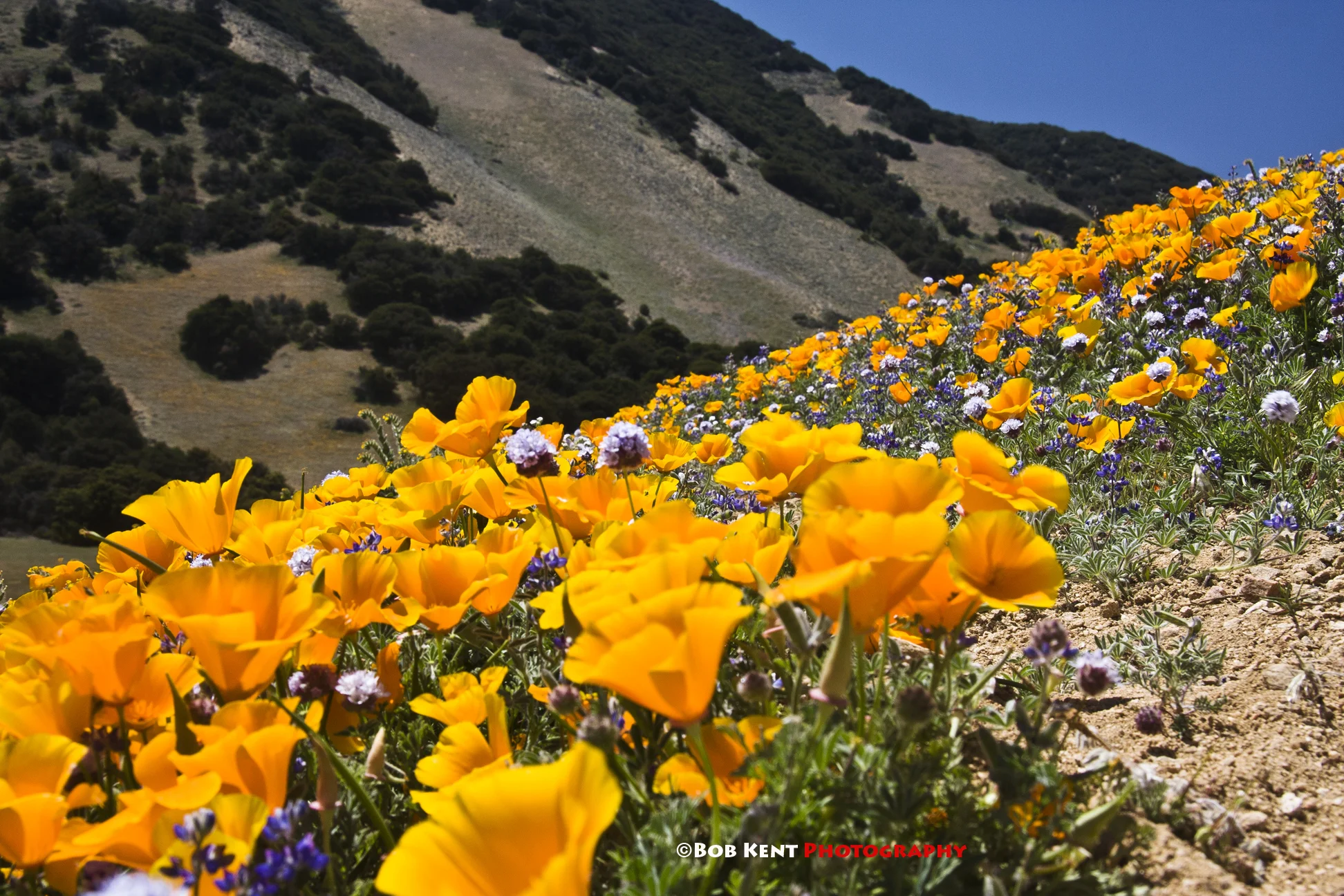
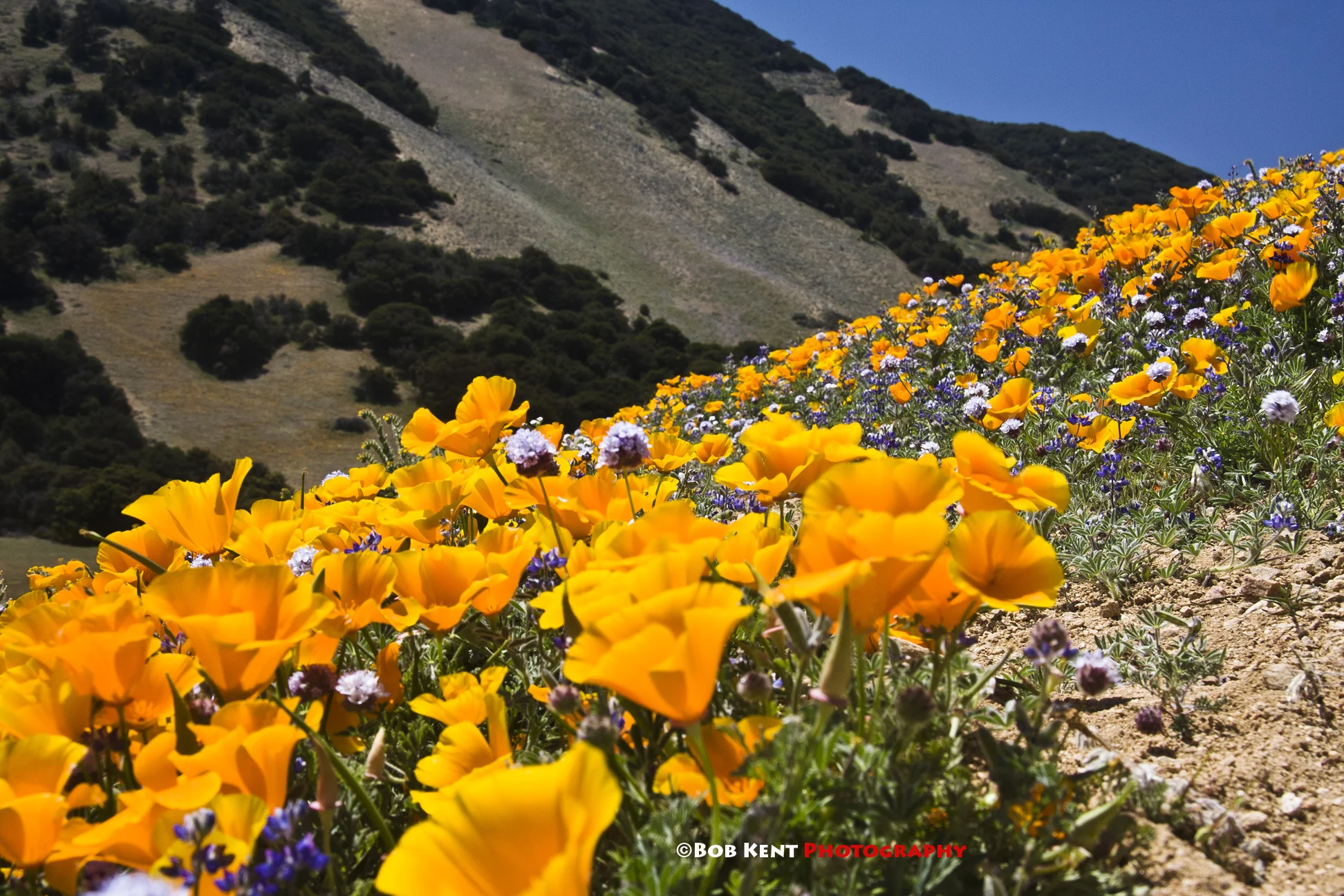
The Wildflowers are Coming, the Wildflowers are Coming; are You Prepared?
It’s February and raining and snowing a lot. The skiers in the Eastern Sierra are in heaven, but what are the non-skiers to do with our time? Prepare for the wildflower season of course. The flowers are already popping up here and there already. I wanted to provide a list resources to help you plan your wildflower hunting season. We will cover:
Where to look for wildflowers and websites that track the wildflower blooms
How to know what you are looking at. Yes, there is an app for that and I found a great website.
Tips on how to take great wildflower pictures
It’s February and raining and snowing a lot. The skiers in the Eastern Sierra are in heaven, but what are the non-skiers to do with our time? Prepare for the wildflower season of course. The flowers are already popping up here and there already. I wanted to provide a list resources to help you plan your wildflower hunting season. We will cover:
Where to look for wildflowers and websites that track the wildflower blooms
How to know what you are looking at. Yes, there is an app for that and I found a great website.
Tips on how to take great wildflower pictures
Forgive the length of the post but it gives you a lot of info.

Locations
Tripsavvy has a great list. I suggest you check the website out because they also have resources by site. Here is an overview of their list and excerpts of their descriptions:
Anza-Borrego Desert: January through March - located south of Palm Springs, Anza-Borrego State Park often puts on the best desert wildflower show in California.
Death Valley: February-April - when they show up, Death Valley's wildflower displays are eye-popping because they occur in a landscape so devoid of color the rest of the year.
North Table Mountain: February-April - in a good year, North Table Mountain is decked out in more than 100 kinds of wildflowers.
Valley of the Oaks: March-April - west of King City that is little changed since Spanish colonial days. The land has never been cultivated, making it a great place for spring wildflowers.
Carrizo Plain: March-April - the wildflower displays that follow a rainy winter there are some of the state's best. During that time, docents lead tours to see them.
Antelope Valley: February-May - in a good year, the carpets of orange-hued California Poppies…
Hite Cove Trail: March-May - most visitors speed right past the Hite Cove Trail on their way to Yosemite, but the number of cars parked near a seemingly insignificant trailhead is a clue. In fact, the Hite Cove Trail is one of the most spectacular places in the Sierras in late spring. Some say it's the best wildflower hike in California.
Eastern Sierras: May-July - the iris blossom between late May and July, depending on elevation They start first around Bishop and bloom later near Mammoth Mountain.

Resources
Modern Hiker is a great site and it is not surprising it has a great page on wildflower resources. Here is a summary of the resources they recommend:
The Theodore Payne Foundation’s Wild Flower Hotline – this reader-submitted flower update covers most of Central and Southern California and is often a good place to start your search.
DesertUSA’s Wildflower Reports – DesertUSA kicks off their wildflower reports in January, which gives people plenty of time to start planning their trips as well as researching early predictions on which areas look like they’re experiencing the right conditions for good blooms.
What’s Blooming in the Santa Monica Mountains – This list focuses on the Santa Monica Mountains National Recreation Area. Here, the reports are divided into different parks and even specific trails within those parks.
Park Specific Sites – Many of the better-known wildflower viewing areas have their own park-specific reports, with varying degrees of regularity and specificity.
Finding Out What You’re Looking At:
There are smartphone apps that help you identify what you are looking at. This page gives a review of several of them out there.
Desert USA has a great page that has pictures and descriptions of a ton of desert wildflowers
Photography Tips
Now that you know some good California locations and how to check how the blooms are doing. Here are some tips on how to take pictures that will wow your friends.
Fields and Flowers – There are two basic approaches to taking wildflowers.

Use objects in the foreground and background to provides a sense of scale
Fields of Dreams - One approach is to take an image of the field. With hundreds and possibly thousands of bright colored flowers make for an incredible scene. To take these scenes over the top try placing something in the foreground of the image to give the viewer a sense of scale. You can also build a layered composition. For example, you could have a tree in the foreground, wildflowers in the midsection, and a building way off in the distance.

See with the flower on the right how fast things get out of focus. On the left the camera was perfectly aligned with the plane of the flower and everything is in focus
Individual Superstar – Some of the most impactful images are of individual flowers. First, pick a good flower that has not been beaten up. Second pay attention to the background. If you have an adjustable camera use an aperture setting to blur the background. Your viewer’s eye will immediately concentrate on the part of the flower that is in focus. Plan out what you want in focus. The front, center, or all the flower. If you want all the flower in focus, make sure your camera is in parallel with the main plane of the flower.
Shutter Speed – Wildflowers are delicate, any amount of wind will begin to blow them around. If you have an adjustable camera set your shutter speed to 200 or 400. It is better to increase your ISO and get a slightly grainy but sharp image than one with no noise that is blurry.
Weather – It may be counter-intuitive, but an overcast day is probably better than a sunny day. Sunny days create harsh shadows and blown out color.
Best Time of Day to Shoot – Early morning when the sunlight is low and there is no wind. One thing to know some flowers don’t open until they get sunlight.
Equipment
Tripod – the flower is moving which means your camera shouldn’t be.
Telephoto Lens - the longer focal length will help you isolate a wildflower in front of a blurred background. It's important that your telephoto lens has a very short minimum focusing distance (at most 5 feet), so you can get close enough to flowers to fill the frame.

Use a telephoto to blur the back ground and put the focus on the flower
Remote Shutter Release – again the flowers are moving so your camera should not be moving. Pushing the shutter release on the camera tends to move the camera. Don’t have one, don’t worry. Just set your camera’s delay timer to 2 or 10 seconds.
DSLR or Mirrorless Camera – Don’t mean to sound snooty but these types of cameras have more options, shutter, aperture, ISO, etc. that gives you more control making the image you want. Don’t have this type of camera don’t worry go anyways. It’s better to go and take pictures, with whatever you’ve got, than not going at all.
Happy hunting!
Sunrise to Sunset in Southern California
My brother and his family come home every holiday season. He is a photographer too, so we look for some time while he is here to go out to shoot. I enjoy his company and it forces me over the rest of the year to get out and to check out places in Southern California for his next visit.
Now I am a 3rd generation Angeleno. I have lived in Southern California all my life. Between work and exploring I get around a lot and considered myself a seasoned local. I thought I had been to most of the interesting places we have here. Wow was I wrong. After a few years of checking sites out for our shooting day, I have realized there is absolutely no way possible you could ever see all that is interesting in Southern California.
My brother and his family come home every holiday season. He is a photographer too, so we look for some time while he is here to go out to shoot. I enjoy his company and it forces me over the rest of the year to get out and to check out places in Southern California for his next visit.
Now I am a 3rd generation Angeleno. I have lived in Southern California all my life. Between work and exploring I get around a lot and considered myself a seasoned local. I thought I had been to most of the interesting places we have here. Wow was I wrong. After a few years of checking sites out for our shooting day, I have realized there is absolutely no way possible you could ever see all that is interesting in Southern California.
This year's photo shoot happen to be on a day where we also had a lunch planned in Marina del Rey with one group of friends and a dinner with family in Calabasas. So we figured we would find a place to shoot the sunrise down south and work our way up to catch the sunset at El Matador State Beach. This way the social engagements were in sync with our photo shoot.
Sunrise from the Observatory
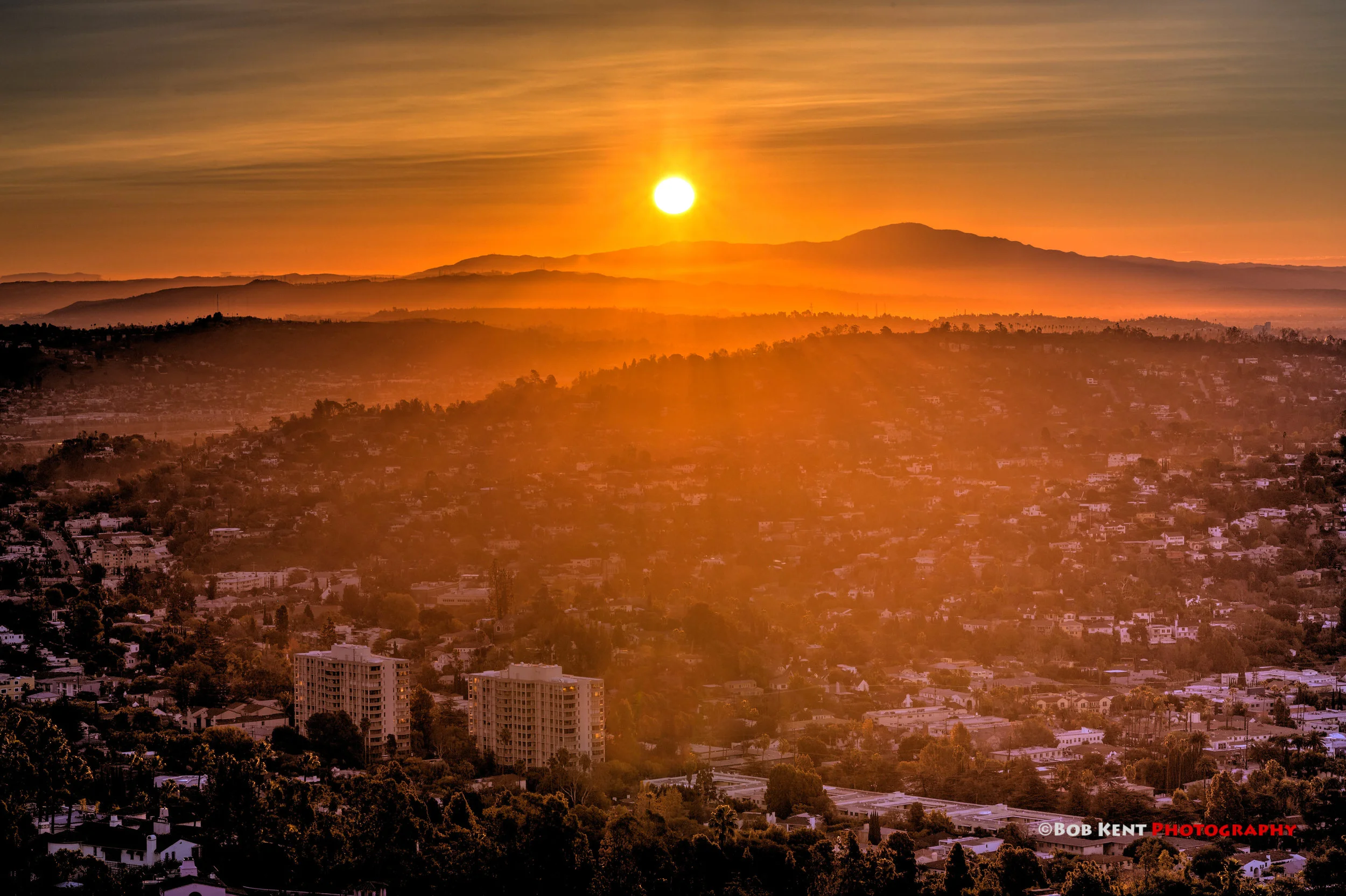
We chose to do the sunrise at the Griffeth Park Observatory. I have been to the Observatory many times at night. I had never even thought about going there for sunrise. It was awesome. It was a clear day and Los Angeles in the golden glow of the morning is beautiful.
Golden Arches looking over Downtown
Curved Vanishing Point
After a while it was time for breakfast. Since we were close to downtown and my brother wanted to shoot the Bradbury building I suggested Philippe. Most people know Philippe for their French Dip sandwiches; usually before a Dodger game. What most don't know is Philippe has a great breakfast. My favorite is their Pork Chops.
After breakfast we headed over to the Bradbury building. For those of you who aren't familiar with the Bradbury it is a historic office building at the corner of Broadway and 3rd. It was built in 1893 and has this incredible 19th style century interior with very intricate ironwork ornamental railings and a glass ceiling. One of the building's claim to fame is being used in the cult classic movie Blade Runner. That is only one of the many movies and TV shows shot in the building. Others including Pay it Forward, Marlowe, Outer Limits, and Chinatown. It is free to check out the lobby and the first staircase platform. Well worth the time to visit and there is a host of other things to see within walking distance including the Grand Central Market, Disney Concert Hall, and the new Grand Park.
From the Staircase
Looking Up at the Glass Ceiling
All Decked Out for Christmas
Right across 3rd street from the Bradbury is one of my favorite building murals. It is called the “Pope of Broadway” and is a painting of Anthony Quinn dancing. Eloy Torrez painted the mural in 1985. He portrays Anthony Quinn as a Christian icon. The image of Quinn has the traditional posture of Jesus on the cross; outstretched arms, slightly bent knees and head tilted to one side. The small enclosed parking the mural is behind gives it a church-like setting to view the mural. The religious theme is reinforced by crosses under Quinn's arms. These crosses are painted in arched doors which mirror the design of the door in the north entrance to the Bradbury building just across the street. I was so excited when I saw the mural this time. Over the years it had gotten pretty worn down. It was faded and the paint was flaking off. Viewing it this time I was overjoyed to see that it had been restored to its original glory.
Pope of Broadway
So after the Bradbury, we went to our lunch and then headed for El Matador State Beach. It was suppose to rain later that day and there were these beautiful high clouds heralding the storms coming. It looked as though they would not block the horizon. This would set up the possibility that they would turn that nuclear red you sometimes see just after sunset. Alas, that was not going to be the case. We had the wonderful subdued pastel sunset instead. What gave the soft sunset some character was the fact that there were 20+ commercial fishing boats just off the shoreline. There must have been one hell of a big school of fish off the beach because they were all still there well after sunset.
Subdued Sunset
Reflections

Time Lapse of the Last Light
Big Stopper
We then headed off to dinner. It was a great way to spend sunrise to sunset and a reminder that Southern California is a treasure trove of beautiful places.